
Until the beginning of the sixteenth century, navigators had scant need to fix their precise position by latitude and longitude. Voyages were short and principally followed the coast; ships were rarely out of sight of land for more than a few hours' ...
As voyaging increased into the uncharted regions of the open ocean, mariners brought back their findings to be retained in written records and represented on maps. To create accurate maps cartographers needed more than recounted tales and estimated d...
In navigating long distances, the compass was as important an instrument for indicating direction as the sand-glass was for marking time. The compass was developed in China around AD 1100, and independently in northern Europe shortly thereafter. By t...
During the great Age of Discovery as mariners began to traverse the Atlantic, and were beyond the sight of land, many fears beset them. They believed that grotesque monsters lay in wait: giant squid would crush their ships in its powerful tentacles, ...
In the sixteenth, and well into the seventeenth century, the course of ocean currents was virtually unknown. But as European ships left the familiar shores of continental Europe and their trade routes in the Mediterranean to venture out into the Sea ...
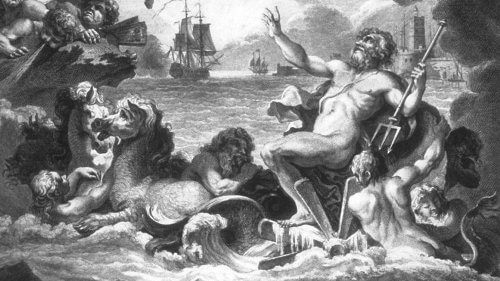
King Aeolus, lord of wind and cloud, ruler of contending winds and moaning gales, controlled their fury lest they flay the sea into a great uproar. So great was his power, that Agamemnon, leader of the Greek expedition to destroy Troy, sacrificed his...
For most persons, the words 'map' and 'chart' are freely interchangeable. However, a distinction may be made between the two. Concern of landsmen is with the geographic characteristics within their realm--its rivers, mountains, forests and swamps, al...

Exhibition CuratorsDr. Harold L. Osher: Introduction; (2) Classic Treasures; and, (1) What is a Treasure? (with Prof. Edney).Prof. Matthew H. Edney: (4c) School Geographies; (5) Manuscript Treasures; and, (6) Monumental Treasures.Yolanda Theunissen: ...
Since before recorded history, humans have observed the motions of the stars, trying to figure out where they were. Eventually, they made physical models of the night sky: that is, globes and celestial maps. The first recorded celestial globe in Gree...
The earliest globes, made in the Classical world, were painted directly onto solid spheres. In the late fifteenth century, a new technique was developed of printing globe "gores" which could then be pasted onto the sphere (70, 71). This innovation se...

